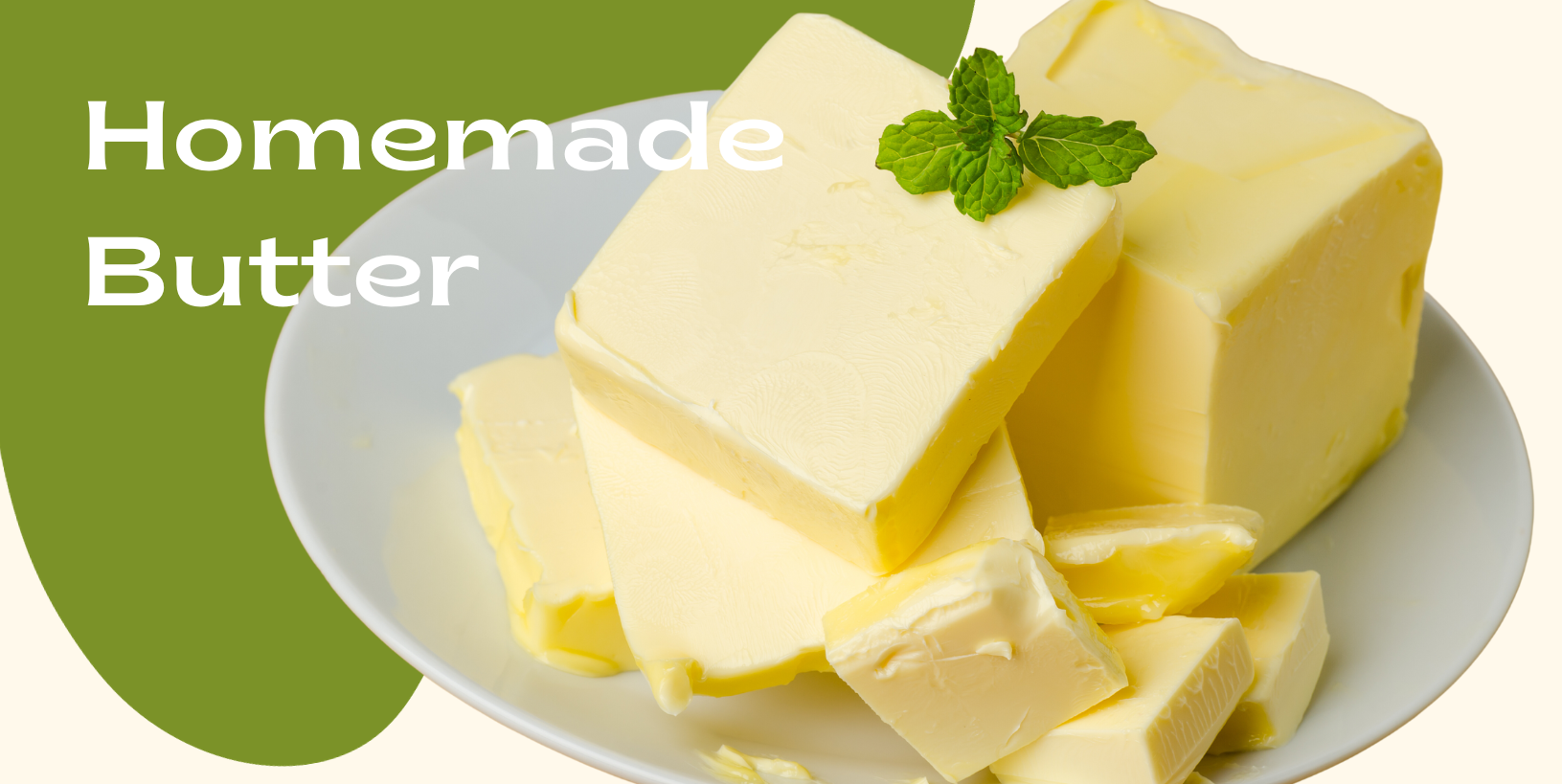
Homemade butter is a simple and delicious treat that can be easily made at home with just a few ingredients.
Ingredients
1/2 cup
Heavy cream, 38% M.F.
1 pinch
Salt
(optional)
Instructions
Pour the heavy cream into a clean, dry container, leaving some room for agitation. This can be a mason jar with a tight lid.
Secure the lid tightly and start shaking the container vigorously. You can also use a stand mixer or a handheld mixer.
After a few minutes of shaking or mixing, you will notice that the cream starts to thicken. At this point, you can take small breaks if needed but continue with the process until it thickens even further. (About 15-20 minutes)
Keep shaking or mixing until the cream separates into solid butter clumps and a liquid called buttermilk. The butter clumps will have a yellowish color.
Strain off the buttermilk and save it for other recipes if desired. Then, rinse the butter solids under cold water to remove excess buttermilk and promote longevity.
If desired, add salt to taste and mix it into the butter.
Finally, shape your homemade butter and store it in an airtight container in the refrigerator. It is now ready to be enjoyed.
You can also add parsley or roasted minced garlic if you like more flavor
Notes:
Butter is made up of water, milk solids, and fat. The fat in butter is present in the form of tiny droplets called fat globules. These globules are primarily composed of milk fat, which contains various fatty acids.
When heavy cream is agitated, whether by shaking or mixing, the forces exerted on the fat globules cause them to collide with each other. As a result, the fat globules begin to stick together and form clumps. This process is referred to as butter churning.
The agitation causes the fat globules to undergo physical changes. The collision between globules causes their thin outer membrane to rupture, releasing the fat droplets inside. These released fat droplets then coalesce and fuse with neighboring droplets, forming larger clusters.
Additionally, the agitation also helps to break down the protective layer of proteins that surrounds the fat globules. This protein layer, called the casein micelle, usually keeps the fat dispersed throughout the cream. When the protective protein layer is disrupted, the fat can aggregate more easily.
Continued agitation encourages further collisions and merging of the fat droplets until they eventually form clumps of butter. The liquid that remains is the buttermilk, which is the water and milk proteins left behind after the fat solidifies.